
Does Weather Actually Change College Football?
Every broadcast has the same line. The rain starts, the camera finds a soaked quarterback, and somebody in the booth says, "This is really going to hurt the passing game." Is that true, or is it just a thing announcers say? We had a database of nearly 17,000 games and the weather at every one of them, so instead of taking the booth's word for it, we checked. Some of it holds up. Some of it really doesn't.
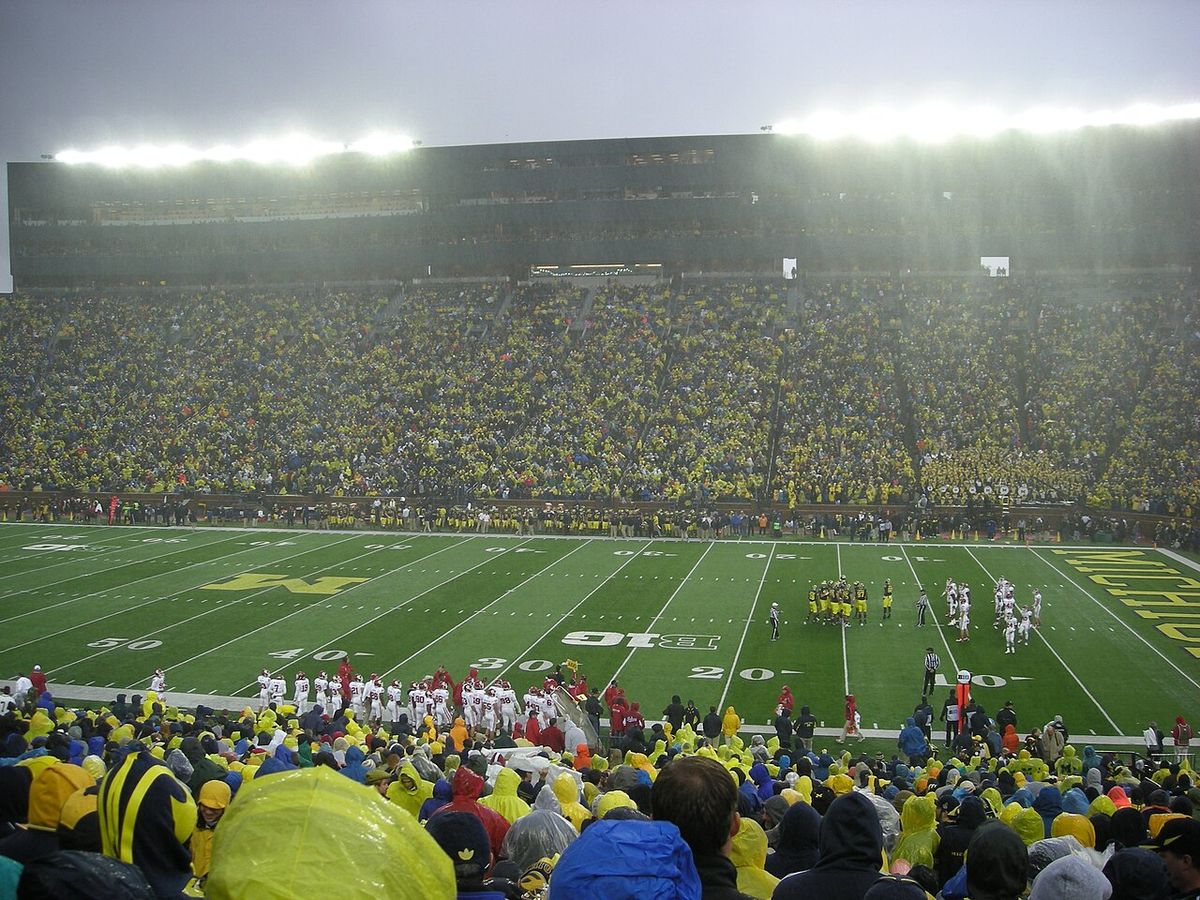

Rain and snow make it a lot harder to throw
This is the clearest thing we found, and it's not close. The wetter or snowier it gets, the fewer passing yards teams put up. And that's true even after accounting for the fact that good offenses sometimes get stuck in bad weather too. Here's what an average team's passing game looks like as the sky gets meaner:
Wind piles on by itself, too. A gusty 20 mph day costs a passing offense about 21 yards all on its own, even under a clear blue sky.
Wind makes field goals a little tougher
Kickers lose some accuracy as the wind picks up: a bit over 2 percentage points on a windy 20 mph day. That's real, but it's a lot smaller than the "no way he makes this" panic a wind-blown miss gets on TV. Rain by itself didn't change kicking at all once we accounted for the wind.
Rain really does cause more turnovers. Wind doesn't.
"Sloppy conditions, sloppy game" is a broadcast classic, and this is the one place where the old saying beats our first try at the math. Once we accounted for which teams tend to play in bad weather, rain comes with a real increase in turnovers: about +0.22 per team for every inch of rain. Wind, on its own, still shows nothing. So that highlight of a running back fumbling in the mud? That's the rain's fault, not the wind's.
So why doesn't the final score change?
This was the most surprising result, so let's slow down. If passing drops in bad weather, shouldn't teams score less, and shouldn't that flip the winner of a close game now and then? Here's the trick: weather doesn't pick a side. It rains on both teams. It knocks down both offenses by about the same amount, in the same game. Here's a made-up example of what that looks like:
Clear day
Rainy day
That's exactly what the real data shows. A game's total score (both teams added together, what sportsbooks call the over/under) really does drop in bad weather. But the margin, how much one team wins by, barely moves, because both teams are getting soaked. We checked this two different ways (a statistics model and a machine-learning model trained to pick winners), and they agreed: once you know how good the two teams are, the weather tells you basically nothing extra about who wins.
Snow doesn't just slow the game down. It changes the plan.
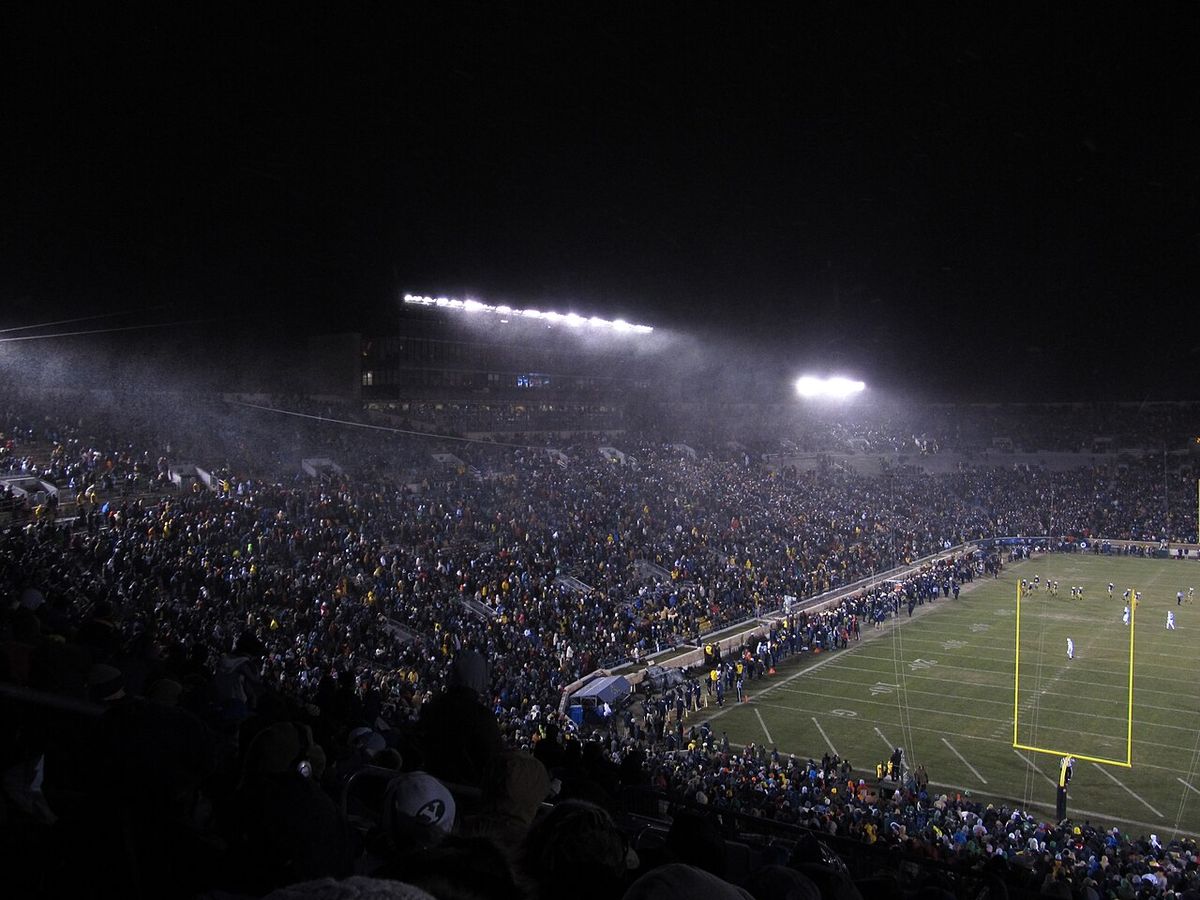

Snow is its own thing. It's not just "extra rain." Teams actually change their whole game plan, leaning on the run instead of trying to throw into the wind and cold:
Mistake #1: the time we almost fooled ourselves
We want to be upfront about this one, because it's a great example of why you should be suspicious of results that look too perfect. Our first test of "does weather affect the final margin" came back with an answer of exactly zero. Not "close to zero." Zero, down to the fourteenth decimal place. Real answers are never that clean; they're messy. It turned out we'd accidentally set the math up so it had to spit out zero no matter what, kind of like asking "what's a number plus its own negative?" and being amazed the answer is always zero. Once we fixed it, the real answer showed up: still no meaningful effect, but now an answer we could actually trust. We're telling you because it's the kind of mistake that's easy to make and easy to miss.
Mistake #2: every weather reading on this site was a few hours late
This one was bigger, and it's why some numbers on this page changed after we first published it. The way we asked our weather provider for a game's conditions had a timezone bug: a kickoff time in UTC (the world's standard clock) got read as local time at the stadium. So every reading, for every game back to 2005, described the weather several hours after the game, not during it. A 6:45pm kickoff was being measured like it started around 11pm. Oops.
We caught it while chasing a totally different question (why so few games seemed to hit 90°F+, when plenty of September games in the South obviously should). We fixed the bug, re-downloaded the real weather for all 17,000+ games (about $9 and a few hours of waiting), and reran every analysis on the site. The good news: every finding pointed the same direction as before. Rain and wind still hurt passing, and the margin still doesn't move. But some exact numbers changed a lot. Rain's effect on passing roughly tripled once we measured the right hours. Every post on this site now uses the fixed data, and where a conclusion actually changed, that post says so.
What's next
This isn't a one-and-done report. The dashboard keeps updating all season, and we used these findings to build a model that tries to predict a game's total score before kickoff. It runs every week as an experiment, but spoiler: it hasn't beaten the sportsbooks' posted number. The next post tells that story.